School IoT projects lead to eight realistic careers: embedded engineer, firmware engineer, hardware and PCB designer, IoT cloud or backend engineer, data engineer, robotics engineer, industrial automation engineer, and technical product roles. All eight are entered on the same currency, which is evidence of work that runs, so a student who starts building at twelve arrives at the first interview with six years of proof rather than a certificate.
When a child learns IoT, they are not just playing with gadgets. They are building the exact skills that hiring managers in those eight fields test for. What follows is the map, path by path: what the job actually looks like on an ordinary Tuesday, what to study, what portfolio evidence matters, and which school-level project is the honest first step towards it. Both the Indian and the UAE markets are covered, because they reward quite different things.
Why one school project touches so many careers
A connected project has four layers, and in industry each layer is somebody's full-time job.
- The thing: sensors, actuators, power and the physical board. A DHT22 reading humidity, a relay switching a pump, a battery that has to last.
- The firmware: the C or MicroPython running on the microcontroller that reads the sensor, handles a bad reading and decides when to speak.
- The link: Wi-Fi, Bluetooth Low Energy, LoRa or a wired bus, and the protocol riding on top, usually MQTT or plain HTTP.
- The data: where readings are stored, how they are queried, what raises an alert, and what a human finally sees on a screen.
A student who builds a soil moisture monitor that messages a parent when the plant needs water has touched all four inside a fortnight. It does not make anyone job ready at fourteen, but it turns the choice between those four teams into an informed one. If the layers are still unclear, how IoT actually works, explained simply is the place to start.
The hardware side: embedded, firmware and board design
Embedded systems engineer
Day to day this is C and C++ written against a microcontroller, with a bench beside the desk. You wire peripherals over I2C, SPI and UART, write interrupt handlers, argue with a memory budget measured in kilobytes and a power budget measured in microamps, and spend a long afternoon working out why a sensor returns 0xFF once an hour. There are few meetings and a lot of instruments: a logic analyser, an oscilloscope and a multimeter.
What to study: C properly before anything else, then digital electronics, the ARM Cortex-M memory model, and a real-time operating system such as FreeRTOS or Zephyr. In India the usual degree route is ECE, EEE or instrumentation; in the UAE it is electrical or computer engineering. Neither degree teaches enough embedded practice on its own, which is precisely why the portfolio carries so much weight.
Portfolio evidence: leave the Arduino IDE behind at some point. One STM32 Nucleo or ESP32-S3 project with register-level code, a measured sleep current and a written reason for choosing that peripheral says more than ten Uno sketches.
School projects that lead here: a line follower tuned with a PID loop rather than a stack of if statements, and a battery powered sensor node that survives a month on two AA cells because the student learned deep sleep and stopped transmitting every second.
Firmware engineer
A close cousin, pointed at a product already in the field. The time goes on bootloaders, over-the-air updates, version management, hardware abstraction so one codebase serves rev A and rev B boards, and reproducing a fault that appears only at one customer's site in winter. Testing matters more than students expect: serious firmware teams run unit tests on a laptop long before code reaches a board.
What to study: build systems such as CMake, state machines, serial protocols, defensive handling of memory, and version control used properly with branches and code review. Rust is worth watching, though C still pays most of the bills.
Portfolio evidence: an ESP32 that updates its own firmware over Wi-Fi and recovers cleanly when the power drops halfway through the write. That one project answers more interview questions than a folder of demos.
Hardware and PCB design engineer
Schematic capture, component selection, layout, ground planes and decoupling, then a bring-up session with a multimeter and a hot air station. Sourcing is part of the job, not an afterthought: a beautiful board built around a part with a twelve month lead time is a useless board.
What to study: analogue and digital electronics with the mathematics left in, then KiCad, which is free and genuinely used in industry, before anyone pays for Altium. Learn to read a datasheet's absolute maximum ratings and its typical application circuit, and treat both as instructions rather than suggestions.
Portfolio evidence: one two-layer board that the student drew, ordered and got working. Small runs from the usual overseas fabricators cost a few dollars plus shipping, so this sits inside a school budget. Include the errata: what was wrong in rev A and what changed.
School projects that lead here: the progression from breadboard to soldered perfboard to a fabricated PCB, ideally for a circuit that already worked, so the student is learning layout rather than debugging two unknowns at once.
The most persuasive item in a student portfolio is a rev B. Anyone can post a project that worked. A student who documents what failed in rev A, what they measured and what they changed is demonstrating engineering judgement, and judgement is what the interviewer is actually testing for.
The software side: IoT cloud, backend and data
IoT cloud and backend engineer
This role decides how a device says hello, proves it is genuine and starts talking. That means MQTT topic structure, certificates and their rotation, provisioning thousands of devices without a human touching each one, message queues, time-series storage, dashboards, alerting rules, and being on call the evening a firmware release makes an entire fleet reconnect at the same second.
What to study: one strong backend language (Python, Go or TypeScript), networking as far as TCP, TLS and certificates, MQTT with a broker you run yourself such as Mosquitto, then a managed platform such as AWS IoT Core or Azure IoT Hub, a relational database plus a time-series one such as InfluxDB or TimescaleDB, and Docker.
Portfolio evidence: a fleet. Three ESP32 boards count as a fleet if they publish to a broker you configured, store into a database, appear on a Grafana dashboard and raise an alert when one of them goes quiet for ten minutes. Noticing absence is exactly where hobby projects stop and professional ones begin.
School projects that lead here: a weather station that publishes to a broker instead of printing to the serial monitor, and a shared class dashboard that several students feed at once.
Data engineer
Sensor data arrives dirty. Readings go missing, clocks drift, and a sensor quietly falls out of calibration in August that nobody notices until November. The data engineer builds the pipelines that clean, join, batch and stream all of it so that analysts and machine learning teams have something trustworthy underneath them. SQL is the core skill and stays the core skill; Python, Kafka and Spark come afterwards.
Portfolio evidence: a year of the student's own logged readings, with an honest written note on the gaps, the outliers and the decision taken about each one. Machine learning sits directly on top of this layer, and a student aiming there is far better served by wrestling with their own messy data than by training one more model on a tidy downloaded dataset.
Robotics and industrial automation
Robotics engineer
ROS 2, simulation in Gazebo, and then many more hours on real hardware than anyone expects. Kinematics, control loops, sensor fusion across an IMU, wheel encoders and a lidar, and computer vision with OpenCV running on a Jetson or a Raspberry Pi. The mathematics is not optional here: linear algebra, probability and control theory decide whether the robot works or wanders. Much of the week is spent testing, tuning and calibrating rather than writing new code.
Portfolio evidence: a robot that copes with a room it was not tuned in, filmed in one continuous take. Anything cut together invites the suspicion that it only worked once.
School projects that lead here: line follower, then maze solver, then a differential drive robot that knows roughly where it is from odometry. Families weighing this against a broader start will find the comparison of robotics and IoT for children useful.
Industrial automation engineer
This is the path most families have never heard of, and it employs a great many people. It means programmable logic controllers such as the Siemens S7-1200 written in TIA Portal, ladder logic, HMI screens, SCADA systems, Modbus and OPC UA, panel wiring, and commissioning on a plant floor where every hour of downtime carries a cost. Increasingly it also means retrofitting sensors onto machines built in 1998 so that the plant can finally see what they are doing, which is IoT by another name.
What to study: instrumentation and control, electrical safety, industrial networks, and vendor training, which carries real weight with employers in this field in a way it does not elsewhere.
Portfolio evidence: a small working rig, a conveyor or a bottle filling model, controlled properly, with wiring diagrams drawn to standard rather than sketched on paper. India hires heavily here through manufacturing; the UAE hires through utilities, facilities management and the energy sector.
Product roles for students who like people as much as circuits
Not everyone who loves building wants to write firmware for a decade. Hardware product managers, solutions and field application engineers, technical sales specialists and hardware programme managers all need somebody who understands what a device can and cannot do. The day goes on customer calls, specifications, deciding what not to build, keeping the firmware, hardware and cloud teams pointed in one direction, running pilots and writing documentation other people can follow.
What to study: keep enough engineering to stay credible, then add clear writing, cost modelling and enough finance to argue sensibly about a bill of materials. The portfolio evidence differs here. It is proof that something reached real users: a pilot with written feedback, a README a stranger can follow, a live demo the student can run without apologising. At school this is the student who organised the team, wrote the documentation and delivered the demo day pitch.
What India and the UAE each reward
India
ECE, EEE and instrumentation remain the standard entry route, and campus placement still decides a great many first jobs. The interesting demand sits in automotive and electric vehicle work around Chennai, Hosur, Pune and Bengaluru, in consumer devices, in defence and space supply chains, in agri-tech, and in the semiconductor manufacturing push now under way. GATE remains the route into an M.Tech or a public sector role for students who want it.
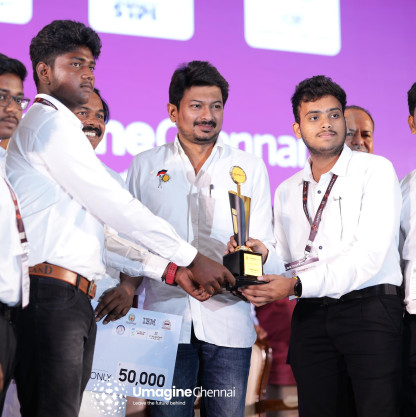
The part families underestimate: at product companies and startups a portfolio plus two real internships moves the needle more than the tier of the college. Hardware competitions are the fastest way to be taken seriously early. Our own team won the Smart India Hackathon 2022 Grand Finale in the hardware category, and that single line has opened more conversations than anything else we have written about ourselves. Fizon Tech has since run more than 150 projects across 12 or more countries, almost all of them won on demonstrated work rather than credentials.
The UAE
The UAE market has a different shape. There is much less chip-level research and development and much more systems integration, commissioning and operations: smart buildings and building management systems, district cooling, water and power utilities, ports and logistics, oil and gas, and city-scale programmes in Dubai and Abu Dhabi. Employers there value vendor certifications, site experience and the ability to coordinate across contractors, and Arabic alongside English helps in client-facing roles.
Study routes include Khalifa University, the American University of Sharjah and the Dubai branch campuses of Indian and British universities. Students in the Emirates have one clear advantage: deployed infrastructure is close by and visible, so a school project on classroom air quality or on the energy use of a school building is a small version of what local industry does every day. We run projects from offices in Trichy and Dubai, so we see both markets from the inside.
The portfolio that actually gets read
Every path above is entered on evidence, and the evidence asked for is remarkably consistent. Six items, in order of how much they matter:
- One project explained end to end: the problem, the wiring, the code, the cost and what you would change next time.
- A sixty second unedited video of the thing working, because reviewers have seen enough renders.
- A written failure log, since the debugging story is the part that shows how the student thinks.
- Public code with a README that a stranger can follow without asking a single question.
- Numbers the student measured themselves: current draw, latency, accuracy against a known reference.
- One thing built for somebody else who then actually used it, even if that somebody is a neighbour with an overflowing water tank.
Two or three items done properly beat fifteen half-finished ones, every time. A folder of tutorials followed to completion proves only that the tutorials were good.
Why starting early is the real advantage
A student who begins at twelve has a decade of building, failing and creating before they ever enter the job market. That head start, not raw talent, is what separates confident creators from nervous beginners. Every project compounds, because each one reuses the sensor, the protocol or the debugging habit learned in the last.
Not every student will become an engineer, and that is fine. The deeper skills IoT teaches travel everywhere: structured problem solving, resilience through failure, logical thinking and the confidence to present an idea. Future doctors, designers and entrepreneurs all benefit from them.
"We are not only training engineers. We are training people who know how to look at a hard problem and calmly take it apart."
Two of our Innovator-level graduates now study embedded systems and electrical engineering at university, with project portfolios they began building as teenagers.
What to do next
Pick one path from this article and build its named starter project within the next month. Photograph it, write down what broke, and publish it while it is still imperfect rather than waiting for a version that never arrives. Three next steps, depending on where your child is now:
- Not sure it is the right time: read our note on the best age to start IoT and coding before spending on a kit.
- Ready to build this weekend: choose something from ten beginner IoT projects to build at home, or move up to Raspberry Pi projects for teenagers if the basics are already comfortable.
- Wanting structure rather than scattered tutorials: our IoT and robotics programme for students aged 8 to 22 runs a graded path from first circuit to a portfolio a university or an employer will read.
Whichever route you take, keep the evidence. The careers described above are all, in the end, decided by what the student can show.
Written by Senthil, Co-Founder at Fizon Tech. He works on the IoT and hardware projects Fizon delivers from its Trichy and Dubai offices, and on the student programme that teaches the same work to learners aged 8 to 22. Explore our IoT programme or get in touch.